
Showing posts with label MBTA. Show all posts
Showing posts with label MBTA. Show all posts
Saturday, October 8, 2022


Saturday, July 30, 2022
Federal Transit Administration Issues Directives to MBTA / Massachusetts Department of Public Utilities to Correct Safety Issues
Wednesday, June 15, 2022
WASHINGTON – To improve safety for the Greater Boston Area's rail transit system, the U.S. Department of Transportation's Federal Transit Administration (FTA) today issued a series of special directives to the Massachusetts Bay Transportation Authority (MBTA) and the Massachusetts Department of Public Utilities (DPU), the state agency responsible for safety oversight of the MBTA's rail transit operations.
A special directive is an order from the Federal government that requires an FTA-regulated transit agency or oversight organization to take immediate action on safety issues within a specific period. The special directives being issued today—four of which are being issued to the MBTA and one to the DPU—are a result of the FTA's safety management inspection of the MBTA that began April 14, 2022, following several incidents that resulted in one fatality and several injuries to passengers and employees on MBTA’s transit rail systems. These special directives require the MBTA, the MBTA Board of Directors, and the DPU to work together to remedy safety concerns and improve the MBTA's safety culture.
"Safety is our number one priority and must be the primary focus for the MBTA and the DPU," said FTA Administrator Nuria Fernandez. "Every transit passenger deserves a safe ride. Every transit worker deserves a safe workplace. The MBTA must immediately take action to improve its safety procedures for its passengers and workers."
FTA underscores that transit riders in the Boston area should not interpret the special directives issued today as a reason to avoid the MBTA subway or light rail. Rather, FTA's actions provide system-wide measures to fix longstanding issues with the agency's overall safety program and culture.
The four special directives issued to the MBTA concern:
- Operating Control Center staffing;
- General safety operating procedures;
- Delayed critical maintenance; and
- Lapses in staff safety certifications.
Each directive includes specific timeframes – ranging from 24 hours to 35 days -- for the MBTA to provide responses and take actions.
The directive to the DPU affirms the need for the agency to enforce the special directives to the MBTA and address outstanding safety issues from FTA's most recent audit of the DPU. The audit, conducted in October 2019, resulted in sixteen findings, of which seven remain open. Those findings concern:
- hazard management;
- accident investigations;
- corrective action plans;
- and rules compliance.
FTA will provide technical assistance both to the DPU to enhance its enforcement role, and to the MBTA to help address the agency's safety issues.
FTA's actions direct the two agencies to adopt system-wide measures to fix longstanding issues with the MBTA’s overall safety program and safety culture, including involvement of the members of the MBTA’s Board of Directors, who are the ultimate decision-makers for the agency, along with leadership of the DPU.
FTA issued the directives as part of its oversight role and to continue to ensure transit remains the safest mode of surface transportation. FTA's Public Transportation Safety Program regulation lays out the agency's authority and process for overseeing and supporting transit safety, including issuing special directives.
Thursday, May 19, 2022
MBTA's Safety Practices Under Federal Review After String of Injuries
The Federal Transit Administration is reviewing the MBTA's safety practices after several high profile incidents resulted in the death or injury of its riders.
Just last week, federal investigators determined that a passenger door on a Boston subway car did not function properly when Robinson Lalin got his arm stuck in it and was dragged to his death last month.
The MBTA has come under fire in recent years for several other incidents involving injuries, including a Green Line collision in the summer of 2021 that sent dozens of people to the hospital. An MBTA spokesperson said they fully support the FTA's goal to enhance safety.
“Sharing the Federal Transit Administration's desire to make public transportation as safe as possible, the MBTA fully supports the FTA's review of the Authority's safety-related processes and practices and welcomes a constructive and collaborative process that focuses on making the T a transit industry leader in safety and reliability," an MBTA spokesperson said.
"This is a process that we are pleased to cooperate with the FTA on," MBTA General Manager Steve Poftak told reporters after an unrelated Fairmount Line event, according to audio provided by a Department of Transportation spokesperson. "I've pledged both externally to the FTA and I've made it clear to everyone at the MBTA that we want to engage and cooperate and collaborate in this process. If we identify any shortcomings related to safety, we will mitigate those immediately."
Officials from the FTA and MBTA held a meeting last month to initiate the process. The MBTA has ramped up infrastructure spending over the past several years in an attempt to make the system safer and more reliable. The MBTA’s major infrastructure spending went from $600 million in 2014 to a record $1.92 billion last year. The goal for the current fiscal year is $2 billion.
"The MBTA has invested over $8 billion in infrastructure improvements over the past five years, including new tracks and revamped stations as well as new buses and trains all to make the system safer and more reliable," a spokesperson said. "Unwavering in its commitment to its riders and employees, the MBTA has strong, well-funded plans for delivering safe, accessible, and reliable services for decades to come.”
A spokesperson pointed to safety projects including the Green Line Anti-Collision Program, upgrades on the Red and Orange Lines and positive train control systems installed on MBTA commuter rail corridors and vehicles.
Pointing to new workers hired since that report's release and an emphasis on capital spending aimed at maintaining, modernizing, and expanding the system, Poftak said the T has made "extensive investments in safety."
"It's not a question of resources, so having subject matter experts come in and take a look at the system -- if they identify gaps, we will solve those gaps, we will mitigate those problems," Poftak said.
"The MBTA is safe," he later added. "We are working every day to make it safer. I take the MBTA every day. My family takes it. The MBTA is safe."
Another federal agency, the National Transportation Safety Board, is already involved with the MBTA amid an investigation into last month's fatal Red Line incident. NTSB investigators said in a preliminary report last week that they found a "fault in a local door control system that enabled the train to move with the door obstructed" after Lalin became trapped.
"Obviously, the Red Line incident was a tragic incident and we offer our condolences to the family," Poftak said. "We've identified the problem. The problem was an anomaly, it was not in any other vehicle. We have put a mitigation in place so that problem can never happen again. We've also changed our inspection protocols, so we can't rule out everything, but we are doing a tremendous amount of work."
MBTA: All New Orange Line Trains Removed From Service After Braking Issue Found
(SOURCE: Fox Boston)
MEDFORD, Mass. — All new Orange Line trains have been taken out of service after transit officials discovered an issue with one train’s braking unit, the MBTA announced Thursday.
One of the new trains experienced a problem in one its multiple braking units at Wellington Station and it became disabled, transit officials said.
In a statement, the MBTA said, “A proactive decision has been made to keep all of the new trains out of service while the vehicle engineering and technical teams troubleshoot the problem.”
There were no reported injuries.
Officials are now working to determine the exact cause of the failure.
Orange Line service will continue uninterrupted with the use of older model trains.
MEDFORD, Mass. — All new Orange Line trains have been taken out of service after transit officials discovered an issue with one train’s braking unit, the MBTA announced Thursday.
One of the new trains experienced a problem in one its multiple braking units at Wellington Station and it became disabled, transit officials said.
In a statement, the MBTA said, “A proactive decision has been made to keep all of the new trains out of service while the vehicle engineering and technical teams troubleshoot the problem.”
There were no reported injuries.
Officials are now working to determine the exact cause of the failure.
Orange Line service will continue uninterrupted with the use of older model trains.
JD - One has to ask... did the "junky old" PTC trolleys have as many issues???
Monday, October 5, 2020
MBTA Forecasts New Orange, Red Line Fleets Will Be Delayed at Least 1 Year
(SOURCE: https://www.necn.com/news/local/mbta-forecasts-new-orange-red-line-fleets-will-be-delayed-at-least-1-year/2331885/)
The full transformation of the Red and Orange Line fleets will be delayed by at least a year as a result of the COVID-19 pandemic and pre-existing manufacturing issues, MBTA officials announced Monday.
Under its contract with Chinese manufacturer CRRC, the MBTA expected to have a fleet of new Orange Line cars delivered by January 2022 and a fleet of new Red Line cars by September 2023.
The Orange Line delivery is now projected to be 15 months late and arrive in April 2023, while the Red Line set is running a year late and is expected to be done in September 2024, according to MBTA Deputy General Manager Jeff Gonneville.
With those delays, the T also pushed back its target for running trains more frequently with shorter headways to summer 2023 for the Orange Line and winter 2024 for the Red Line.
Gonneville said the T's contract with CRRC includes language allowing the agency to seek damages for delays and that officials intend to explore its possible application.
Monday, December 9, 2019
More Than 20 Arrested in Blockades of Train Delivering Coal to N.H. Power Plant
(SOURCE: Boston Globe)
Protesters blocked railroad freight tracks in Worcester, Ayer, and Hooksett , N.H. ,
on Saturday and Sunday, trying to keep a train from delivering coal to a New Hampshire
“In 2019, there’s no reason for us to still be burning
coal,” said Marla Marcum, director of the Climate Disobedience
Center
The train was delivering coal to Merrimack Station, a power
plant in Bow, N.H. The protests were part of an ongoing effort to shut down the
coal power plant.
No injuries were reported. Protesters called the train’s
dispatchers before they blocked the tracks so as not to take engineers by
surprise, Marcum said.
In Worcester
In Ayer, police arrested 12 people on charges of trespassing
on railroad property Sunday. All were released on personal recognizance and
scheduled to appear in Ayer District Court, Ayer Police Deputy Chief Brian Gill
said.
 |
| Bow Coal Train 1/26/10 |
Another 12 people were arrested on a railroad bridge in
Hooksett, where they had hung an anti-coal banner, said Rebecca Beaulieu, a
climate organizer with 350 New
Hampshire
They were charged with trespassing and are due in court in
January.
MBTA Safety Review Panel Final Report
Want to read more about the December 9, 2019 MBTA Safety Review Panel Final Report? Try these links:
https://d279m997dpfwgl.cloudfront.net/wp/2019/12/12-09_MBTA_Safety_Executive_Summary.pdf
https://www.bostonglobe.com/metro/2019/12/09/read-panel-summary-mbta-operations-and-safety/7cJoGcT8qEibnkZyDSkQGP/story.html
https://blog.mass.gov/transportation/mbta/mbta-safety-review-panel-recommendations-to-fmcb-to-improve-safety-for-t-riders-employees/
https://d279m997dpfwgl.cloudfront.net/wp/2019/12/12-09_MBTA_Safety_Executive_Summary.pdf
https://www.bostonglobe.com/metro/2019/12/09/read-panel-summary-mbta-operations-and-safety/7cJoGcT8qEibnkZyDSkQGP/story.html
https://blog.mass.gov/transportation/mbta/mbta-safety-review-panel-recommendations-to-fmcb-to-improve-safety-for-t-riders-employees/
Damning MBTA Safety Report Released
(SOURCE: Boston Globe - J. Ellement)
The MBTA’s safety system was examined by three outside
experts and their findings were damning at best. What follows is five of the
major conclusions outlined in the executive summary based on interviews with T
employees at every level of the workforce.
- The T has failed to include safety concerns in its daily
operations, routine maintenance schedules or long-term investment and
construction plans, according to the report.
“In essence, safety is not the priority at the T, but it
must be. To meet the demands of the future, the agency must address its safety
culture – it is critical to every aspect of the agency.’’
- Turnover at the top job, the T’s general manager, has
eroded the importance of safety issues at the very highest levels of the
region’s primary public transit system, the panel found. There have been nine
general managers since 2010.
“Leadership sets the
tone for safety ... the recurrent turnover in general managers (GMs) over the
past 10 years has been incredibly disruptive and has placed the agency in a
vulnerable position. This may be the overarching reason that we see the level
of safety deficiency at the agency.”
- T employees don’t talk to one another, and this is
especially troubling because safety concerns raised inside the agency rarely
reach the right person or office that can then take the needed corrective
action, the report found.
“There is a total lack of routine upward or downward
communication within the agency. Employees at all levels told the Panel that
the T has many siloes and that communication is rarely, if ever, done across
departments. Leadership has not identified or attempted to open channels of
communication with the workforce.... The only avenue for communication we
identified during this review is a ‘safety hotline’ which does not appear to
have received the confidence of the workforce in the field.”
- The T does have a stand-alone safety department but it is
an organizational orphan with little ability to play a forceful role in
workplace safety and other safety concerns facing the agency.
“The safety department, which should be providing day-to-day
leadership for safety initiatives, is somewhat debilitated in what they can
accomplish, and lacks the ability to guide the agency at large,” the report
said. “For example, the staff is absent in the field to support the workforce
and champion a safe work environment. On the other hand, the safety department
is grossly understaffed, lacks subject matter experts (SMEs) and is currently
not in any position to manage the needs of the agency.”
- The experts concluded that the MBTA’s commuter rail
system, which is operated by Keolis Commuter Services, has a far better safety
environment than the T’s transit system. The experts noted that Keolis operates
under the Federal Railroad Administration rules and regulations.
“It is noteworthy to mention that the commuter rail service
is performing well and does not face many of the challenges that were
identified on the transit side of the house. The Panel attributes this higher
level of performance to the structure provided by FRA regulations, which are
clearly defined and have fiscal consequences if not complied with.”
John R. Ellement can be reached at ellement@globe.com. Follow
him on Twitter @JREbosglobe.
Monday, September 16, 2019
Recent New England Model Railroad Announcements SEPT 2019

Wednesday, April 10, 2019
Low-speed Collision & Derailment of MBTA Commuter Trains in Boston 4/10/19
 https://www.necn.com/news/new-england/Buses-to-Replace-MBTA-Commuter-Rail-Fairmount-Line-After-Minor-Derailment--508363091.html
https://www.bostonherald.com/2019/04/09/upright-derailment-slows-train-traffic-at-south-station/
https://boston.cbslocal.com/2019/04/10/mbta-fairmount-commuter-rail-line-train-derailment-service/
https://www.bostonglobe.com/metro/2019/04/09/commuter-rail-train-derails-outside-south-station-causing-delays/N2JwPaKmA4TzhX2EHiGw1N/story.html
Wednesday, April 3, 2019
MBTA Commuter Train Derails in Boston MA 4/2/19
https://whdh.com/news/train-derailment-near-north-station-impacting-several-commuter-rail-lines/
https://www.gloucestertimes.com/news/mbta-derailment-lengthens-morning-commute/article_c536d118-5561-11e9-b8ac-bfd76b53c520.html
https://www.bostonherald.com/2019/04/02/no-injuries-reported-in-slow-speed-derailment-of-mbta-rockport-train/
https://wbznewsradio.iheart.com/content/mbta-commuter-rail-train-derailed-outside-north-station/
https://www.gloucestertimes.com/news/mbta-derailment-lengthens-morning-commute/article_c536d118-5561-11e9-b8ac-bfd76b53c520.html
https://www.gloucestertimes.com/news/mbta-derailment-lengthens-morning-commute/article_c536d118-5561-11e9-b8ac-bfd76b53c520.html
https://www.bostonherald.com/2019/04/02/no-injuries-reported-in-slow-speed-derailment-of-mbta-rockport-train/
https://wbznewsradio.iheart.com/content/mbta-commuter-rail-train-derailed-outside-north-station/
https://www.gloucestertimes.com/news/mbta-derailment-lengthens-morning-commute/article_c536d118-5561-11e9-b8ac-bfd76b53c520.html
Wednesday, December 27, 2017
Recent New England Model Railroad Announcements
It has been a long time since I posted an update of New England model railroad releases, so here goes!


 N SCALE:


HO SCALE:
ATLAS: Alco RS-32
Locomotive – Central VermontATLAS: Bombardier multi-level control/standard
coaches – MBTA (multiple #s) (2nd Quarter 2018)

 N SCALE:
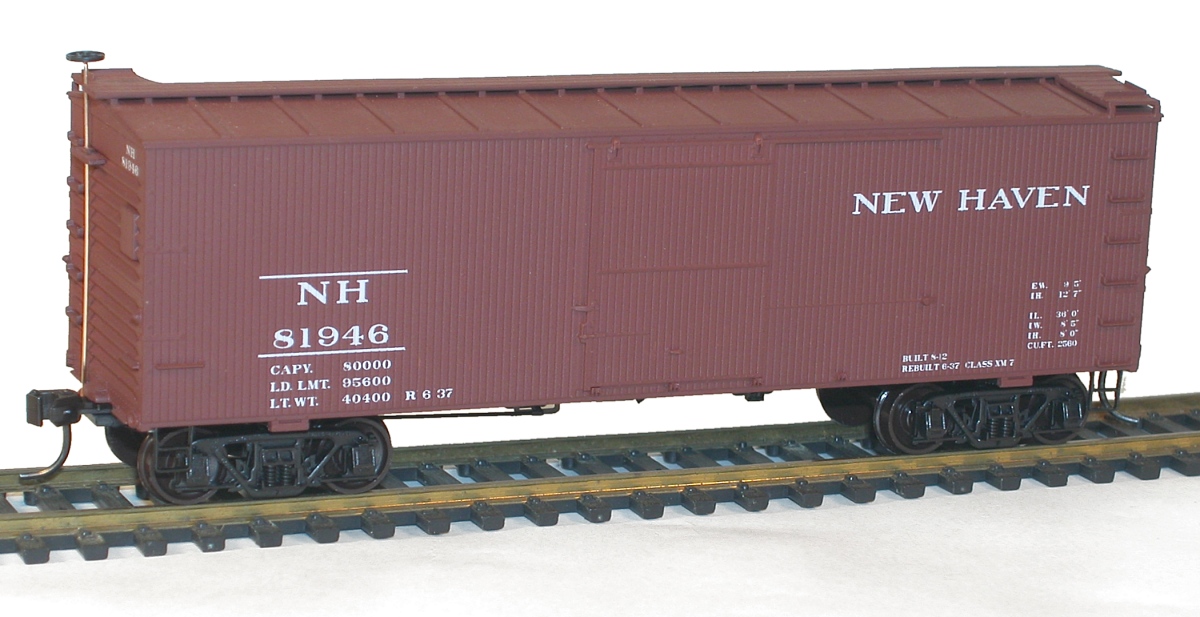
MODEL POWER: 2-6-0 Mogul Locomotive – Boston & Maine,
New Haven,
MODEL POWER: 4-4-0 American Locomotive – Boston & Maine
O SCALE:
Z SCALE:
Friday, March 10, 2017
Rapido Releases Drawings of Upcoming MBTA GM New Look "Fishbowl" Bus
OK, OK... this isn't exactly a train related item... UNLESS you are into the history of trolleys, which DID use rails. After all, many buses were called "trackless trolleys"!
I just have to add this info to the blog, because the product looks way too cool to skip over.
The Rapido website has many interesting photos and video regarding their upcoming HO scale General Motors "New Look" bus, and also of their own personal bus.
The MBTA version will come in three "road numbers", in two versions, Standard and Deluxe.
Pre-orders are due May 8, 2017 for Fall 2017 delivery.

I just have to add this info to the blog, because the product looks way too cool to skip over.
The Rapido website has many interesting photos and video regarding their upcoming HO scale General Motors "New Look" bus, and also of their own personal bus.
The MBTA version will come in three "road numbers", in two versions, Standard and Deluxe.
Pre-orders are due May 8, 2017 for Fall 2017 delivery.

Tuesday, March 8, 2016
Maintaining The MBTA’s 100-Year-Old Signals | WBUR
 WHOLE ARTICLE: ‘They Don’t Make These Anymore’: Maintaining The MBTA’s 100-Year-Old Signals | WBUR
When the T’s signals break, they go to the signal repair facility in South Boston. It’s cluttered with tools and trinkets, and looks like someone’s garage workshop — except that instead of fixing up your dad’s old Mustang to take it out for a ride on the weekend, you’re fixing up your main source of transportation................................................
Monday, February 1, 2016
MBTA Works on Locomotive Woes
Even good news for the MBTA, it seems, comes with bad news.
The latest example: The T's finally put into service 40 new commuter rail
locomotives it bought for over $5.5 million apiece, replacing units that were
in some cases nearly 40 years old.
But from July to December, they still had over
60 breakdowns. And according to new data first reported by Nicole Dungca in The
Boston Globe Monday, failures with the new units accounted for nearly a third
of all delayed trains from June through December. Two of the brand-new
locomotives have even been sent back to Motive Power Inc. and its engine
subcontractor, General Electric, for major repairs.
Massachusetts Transportation Secretary Stephanie Pollack, in
an interview after Monday afternoon’s meeting of the MBTA Fiscal and Management
Control Board, said she is not worried that the HSP46 locomotives are lemons.
“There's a reason why you buy locomotives with
two year warranties, and it does take a certain amount of time to shake them
down,’’ Pollack said. “We’re obviously seeing things that need to be fixed, and
we fully intend to hold the manufacturer accountable for under the warranty.’’
MBTA General Manager Frank DePaola said that “we’re not
completely pleased” with the units but agreed that problems are being fixed,
some “operator error” issues with engineers and mechanics have been addressed,
and they are proving to get more reliable.
In December, the most recent month with full
statistics, the HSP46 units went on average 18,723 miles between failures,
according to data provided by MBTA spokesman Joe Pesaturo. That was three to
five times better than most of the other older units still in operation.
Kate Price of Wellesley, waiting for her afternoon train
home, said she’s been enjoying reliable service this winter. “I take it every
single day, and it’s been good so far, knock wood,’’ Price said. She never
notices what kind of locomotive is pulling her train. “Not really, no. I just
want it to get me there,’’ Price said.
The T first ordered the locomotives back in 2010
and many that arrived in Boston
in 2014 were kept off the road for months while problems were worked out. The T
boasted then the units would reduce emissions and save 36,500 gallons of diesel
fuel annually compared to other units.
“You need to look at the overall performance of
the fleet,’’ Pollack said. “While it is not where it needs to be, and we will
get it better, and we will get anything fixed that is owed to us under
warranty, as a fleet it is working better than the locomotives it replaced.
There is no question about that.’’
Thursday, January 21, 2016
Thursday, December 10, 2015
Investigation Into Tampering Underway After Red Line MBTA Train Departs Without Operator
(SOURCE: NECN.COM)
Authorities are investigating whether someone tampered
with safety equipment on a Red Line train in Massachusetts, causing the Boston-bound
train to depart Thursday morning without an operator and with passengers on board.
Gov. Charlie Baker said in a press conference Thursday
some of the train's safety controls appear to have been manipulated.
"It's pretty clear the main control that drives the
train was tampered with," Baker said. "I think the big issue on
this is whether it was a negligence issue or something else."
The MBTA released a statement saying the incident
happened shortly after 6 a.m., when the train departed Braintree Station. The
train made no stops and continued past North Quincy Station, when workers were
able to cut power to the third rail, bringing the train to a stop.
Baker said in the press conference the third rail was cut
off a couple minutes after the train left, but the momentum of the train caused
it to coast through several stations before it ground to a halt.
The stations highlighted in yellow were affected during
the Red Line incident Thursday morning.
Passengers were asked to get off the train, which was
then taken out of service and examined. Massachusetts Department of
Transportation officials said the train operator suffered non-life threatening
injuries. It's unclear how the person was hurt, but Baker said the operator got
out of the train to check on the signal.
"Passenger safety is the highest priority for the
MBTA and this highly troubling incident is under investigation by Transit
Police detectives," MBTA General Manager Frank DePaola said in a statement
Thursday.
Meanwhile, FBI officials in Boston said they're aware of the incident and
are letting MBTA Transit Police investigate "at this moment." Baker
said MassDOT and public saftety officials are also investigating.
In a statement, Baker said he's "grateful no
passengers were injured in this troubling incident and will be monitoring the
investigation closely."
He said the incident appears to be isolated.
According to the MBTA, the Red Line accommodates more
than 250,000 riders every day during the week.
Tuesday, November 3, 2015
MBTA to Install $451 million Technology to Prevent Train Crashes
(SOURCE: Nicole Dungca, The Boston Globe)
The Massachusetts Bay Transportation Authority plans to spend an estimated $451.3 million to install technology meant to prevent accidents such as the Amtrak derailment that killed eight people in Philadelphia in May.
The fiscal control board that oversees the agency on Monday voted 4-0 to approve the contract to install what’s known as “positive train control” on all commuter rail lines that don’t already have it. The technology is designed to automatically slow trains on certain stretches of track.
The project could mean weekend shutdowns for commuter rail lines starting in March 2017 and continuing into 2018. Officials said the shutdowns would accelerate installation and save money.
MBTA officials said they expect the project to be complete in 2020, making the agency among the last major railroads across the country to install the federally mandated technology.
The increased costs come as transit advocates are already worried about fare hikes and are urging that they be kept to a minimum.
MBTA officials made it clear Monday that the costs will become a burden for the agency. Gerald Polcari, chief procurement officer for the MBTA, called the federal law requiring it an “unfunded mandate.”
“Do we have the funds for this?” he said. “No.”
The law requiring the technology was passed in 2008, and it was
thrust into the spotlight this year when an Amtrak train derailed while
traveling too quickly over a curve, killing eight people and injuring
about 200 others. The National Transportation Safety Board said that positive train control could have prevented the accident.
Under the 2008 law, transit agencies had to finish implementing the technology by 2015 — yet so many cash-strapped agencies were behind that Congress recently passed an extension.
Positive train control, which must be installed on trains, tracks, and signals, is not new to the MBTA. Amtrak installed the technology on the Northeast Corridor tracks that run from New Haven to Boston, which includes the MBTA’s Providence/Stoughton line, according to David Diaz, a vice president with LTK Engineering Services, a firm helping the MBTA with the project.
But the system has 12 other commuter lines operating without the new technology.
The installation contract represents $338.5 million of the overall $451.3 million cost. The T will also need an additional $112.9 million for consultant services; financial support to help Keolis, the commuter rail operator, with the project; MBTA staff support; and contingency costs.
The additional expenditure comes as the governor-appointed control board figures out ways to cut costs and increase revenue. The agency spends nearly $2 billion annually and recently estimated it would take about $7.3 billion to fully upgrade its trains, tracks, and other infrastructure.
To fund the positive train control work, the MBTA plans to borrow federal money through programs created to finance projects. One of those programs, the Transportation Infrastructure Finance and Innovation Act, would cover about a third of the costs. MBTA officials said they could look into a combination of loans, as well as using other internal funds.
The costs will continue to grow once the technology is installed. According to officials, Keolis would need to spend about $12 million a year to maintain the technology.
Asked whether the extra costs will affect Keolis’s contract, company spokeswoman Leslie Aun directed questions to the MBTA. Agency officials did not immediately comment.
State Representative William Straus of Mattapoisett, who is cochairman of the Legislature’s transportation committee, said the large cost of the project shows how much the MBTA is in need of substantial investment.
“I think it’s going to be a challenge for the administration to come up with a financing plan if they limit themselves to simply changing operations and looking for efficiencies,” he said. “They’re good things, but I don’t think it will find you the kind of money that the system needs.”
In December, the MBTA’s control board will lay out a plan for closing its deficit, which will include cost controls and possibly fare increases.
Such hikes have worried transit advocates, several of whom on Monday urged the fiscal control board to raise fares by no more than 5 percent. Rafael Mares, senior attorney for the Conservation Law Foundation, said he believes a state law allows the MBTA to increase fares by 5 percent every two years, at most.
But state transportation department lawyers and Transportation Secretary Stephanie Pollack note that the language of the law says the MBTA can increase fares only every two years or only at a rate of 5 percent annually. They believe that means the MBTA could hike fares by 10 percent every two years.
That interpretation is also supported by key legislators, including Straus.
“I don’t think there’s any indication whatsoever that that’s what they’re thinking of, but that’s the size of the ballpark,” Straus said.
Also on Monday, MBTA officials said they are hiring a company to find out why the agency spends about 1.7 times more on bus maintenance than the average spent by other large urban public transit systems.
Officials revealed the agency spent about $40.81 per hour on maintaining its 1,060 buses in 2013. That compares with an average of $24.32 for 71 other public transit agencies in urban areas, according to the National Transit Database’s 2013 figures.
The 2013 figures were the most current available.
The MBTA’s chief administrator, Brian Shortsleeve, called the differences between the agencies “stark” but said the MBTA is not yet ready to propose ways to drive down the costs.
The Massachusetts Bay Transportation Authority plans to spend an estimated $451.3 million to install technology meant to prevent accidents such as the Amtrak derailment that killed eight people in Philadelphia in May.
The fiscal control board that oversees the agency on Monday voted 4-0 to approve the contract to install what’s known as “positive train control” on all commuter rail lines that don’t already have it. The technology is designed to automatically slow trains on certain stretches of track.
The project could mean weekend shutdowns for commuter rail lines starting in March 2017 and continuing into 2018. Officials said the shutdowns would accelerate installation and save money.
MBTA officials said they expect the project to be complete in 2020, making the agency among the last major railroads across the country to install the federally mandated technology.
The increased costs come as transit advocates are already worried about fare hikes and are urging that they be kept to a minimum.
MBTA officials made it clear Monday that the costs will become a burden for the agency. Gerald Polcari, chief procurement officer for the MBTA, called the federal law requiring it an “unfunded mandate.”
“Do we have the funds for this?” he said. “No.”
To fund the work, the MBTA plans to borrow federal money through programs meant to finance transportation projects.
Under the 2008 law, transit agencies had to finish implementing the technology by 2015 — yet so many cash-strapped agencies were behind that Congress recently passed an extension.
Positive train control, which must be installed on trains, tracks, and signals, is not new to the MBTA. Amtrak installed the technology on the Northeast Corridor tracks that run from New Haven to Boston, which includes the MBTA’s Providence/Stoughton line, according to David Diaz, a vice president with LTK Engineering Services, a firm helping the MBTA with the project.
But the system has 12 other commuter lines operating without the new technology.
The installation contract represents $338.5 million of the overall $451.3 million cost. The T will also need an additional $112.9 million for consultant services; financial support to help Keolis, the commuter rail operator, with the project; MBTA staff support; and contingency costs.
The additional expenditure comes as the governor-appointed control board figures out ways to cut costs and increase revenue. The agency spends nearly $2 billion annually and recently estimated it would take about $7.3 billion to fully upgrade its trains, tracks, and other infrastructure.
To fund the positive train control work, the MBTA plans to borrow federal money through programs created to finance projects. One of those programs, the Transportation Infrastructure Finance and Innovation Act, would cover about a third of the costs. MBTA officials said they could look into a combination of loans, as well as using other internal funds.
The costs will continue to grow once the technology is installed. According to officials, Keolis would need to spend about $12 million a year to maintain the technology.
Asked whether the extra costs will affect Keolis’s contract, company spokeswoman Leslie Aun directed questions to the MBTA. Agency officials did not immediately comment.
State Representative William Straus of Mattapoisett, who is cochairman of the Legislature’s transportation committee, said the large cost of the project shows how much the MBTA is in need of substantial investment.
“I think it’s going to be a challenge for the administration to come up with a financing plan if they limit themselves to simply changing operations and looking for efficiencies,” he said. “They’re good things, but I don’t think it will find you the kind of money that the system needs.”
In December, the MBTA’s control board will lay out a plan for closing its deficit, which will include cost controls and possibly fare increases.
Such hikes have worried transit advocates, several of whom on Monday urged the fiscal control board to raise fares by no more than 5 percent. Rafael Mares, senior attorney for the Conservation Law Foundation, said he believes a state law allows the MBTA to increase fares by 5 percent every two years, at most.
But state transportation department lawyers and Transportation Secretary Stephanie Pollack note that the language of the law says the MBTA can increase fares only every two years or only at a rate of 5 percent annually. They believe that means the MBTA could hike fares by 10 percent every two years.
That interpretation is also supported by key legislators, including Straus.
“I don’t think there’s any indication whatsoever that that’s what they’re thinking of, but that’s the size of the ballpark,” Straus said.
Also on Monday, MBTA officials said they are hiring a company to find out why the agency spends about 1.7 times more on bus maintenance than the average spent by other large urban public transit systems.
Officials revealed the agency spent about $40.81 per hour on maintaining its 1,060 buses in 2013. That compares with an average of $24.32 for 71 other public transit agencies in urban areas, according to the National Transit Database’s 2013 figures.
The 2013 figures were the most current available.
The MBTA’s chief administrator, Brian Shortsleeve, called the differences between the agencies “stark” but said the MBTA is not yet ready to propose ways to drive down the costs.
Monday, October 19, 2015
Tricks, Not Treats from T - Howie Carr
Tricks, Not Treats from T - by Howie Carr
At least they’re not bringing back “Dr.” Beverly Scott – but give the hacks at the MBTA time. It isn’t even Halloween yet.
So after the complete breakdown of mass-transit service in Boston last winter, the hacks have decided how to solve their problem, in the traditional way: by throwing more money at the featherbedding unions, by raising the fares and parking fees of all the same commuters they robbed blind less than nine months ago.
Thank you sir, may I have another?................................................. READ WHOLE ARTICLE
At least they’re not bringing back “Dr.” Beverly Scott – but give the hacks at the MBTA time. It isn’t even Halloween yet.
So after the complete breakdown of mass-transit service in Boston last winter, the hacks have decided how to solve their problem, in the traditional way: by throwing more money at the featherbedding unions, by raising the fares and parking fees of all the same commuters they robbed blind less than nine months ago.
Thank you sir, may I have another?................................................. READ WHOLE ARTICLE
Subscribe to:
Posts (Atom)